Main Body Parts
Learn essential vocabulary for your main body parts including head, arms, legs, hands, and feet with clear examples and pronunciation.
Learning Objectives
[Ad: after-learning-objectives]
Main Body Parts
Learning the names of body parts is essential for everyday communication. This vocabulary will help you describe yourself, talk about health, understand basic instructions, and communicate with doctors. In this lesson, you'll learn the most important parts of the human body including the head, face, arms, hands, and legs.
📖 A Visit to the Doctor
Last week, Tom fell down and hurt his knee. His leg was very sore.
He went to the doctor. The doctor said: 'Show me where it hurts. Can you move your foot?'
Tom moved his toes and bent his knee slowly. 'My back also hurts,' he said.
The doctor checked his arms, shoulders, and neck too. 'Everything else is fine!' she smiled.
Knowing body part vocabulary helps you communicate clearly with doctors and describe how you feel in everyday situations!
[Ad: after-introduction]
Head and Face
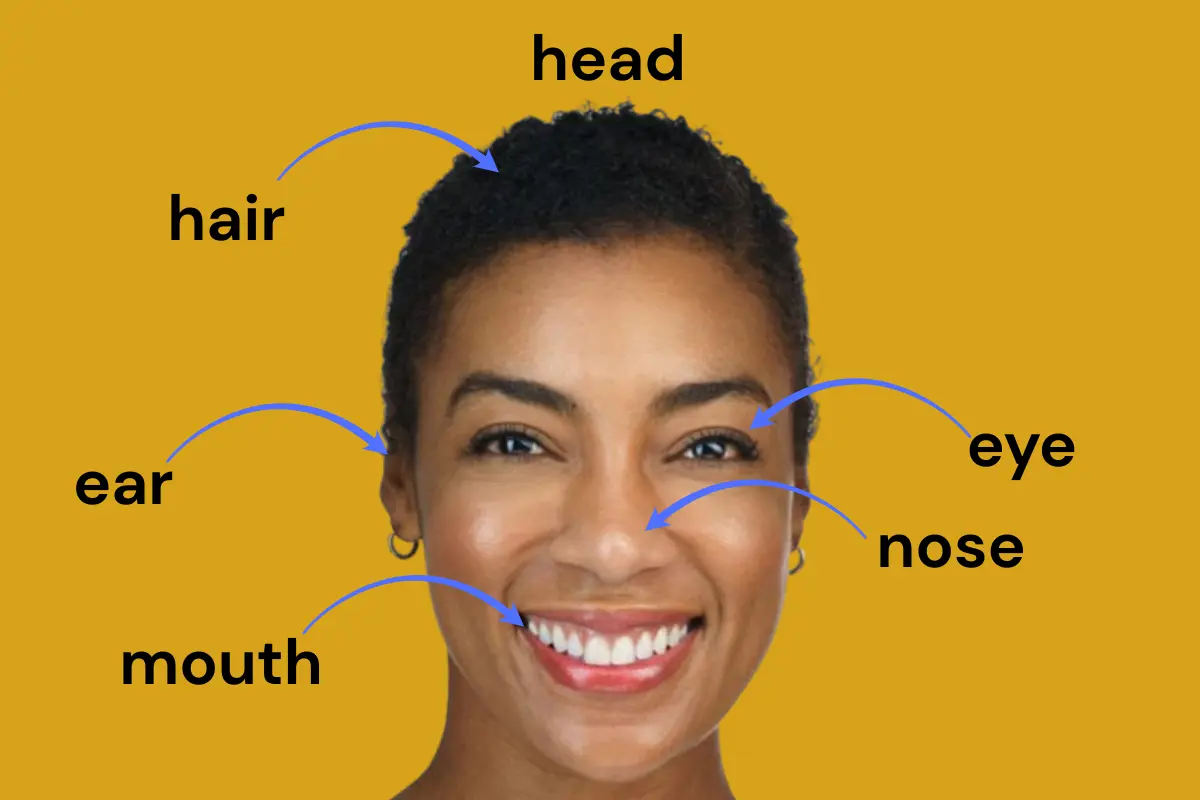
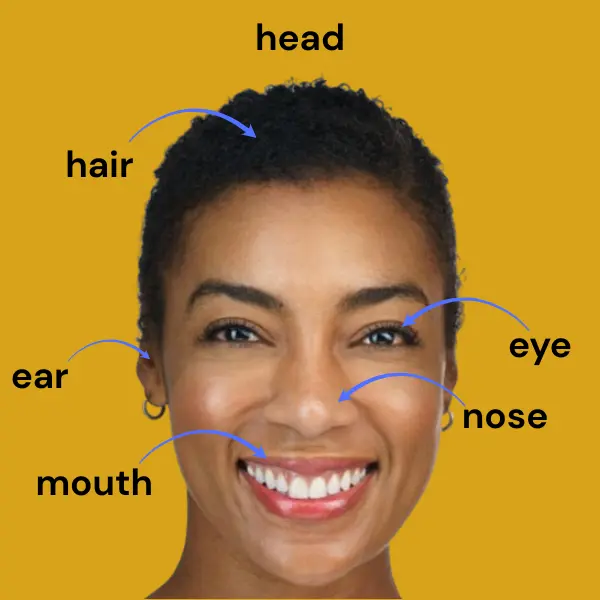
Head
The top part of your body that contains your brain.
- I hit my head on the door.
- My head hurts.
- She has a small head.
Face
The front part of your head with eyes, nose, and mouth.
- Please wash your face before breakfast.
- He has a friendly face.
- Her face is red.
Eyes
The parts of your face you see with. ('eye' singular, 'eyes' plural)
- She has beautiful blue eyes.
- Close your eyes.
- My eyes are tired.
Ears
The parts of your head you hear with. ('ear' singular, 'ears' plural)
- I can't hear you. My ears hurt.
- He has small ears.
- Clean your ears.
Nose
The part of your face you breathe and smell with.
- My nose is cold.
- She has a small nose.
- I can smell with my nose.
Mouth
The part of your face you eat and speak with.
- Open your mouth and say "Ahh."
- My mouth is dry.
- She has a big mouth.
Hair
What grows on your head.
- I need to wash my hair.
- She has long black hair.
- His hair is brown.
Want to try a Main Body Parts quiz?
Practice with multiple choice questions
[Ad: after-head-face-section]
Upper Body
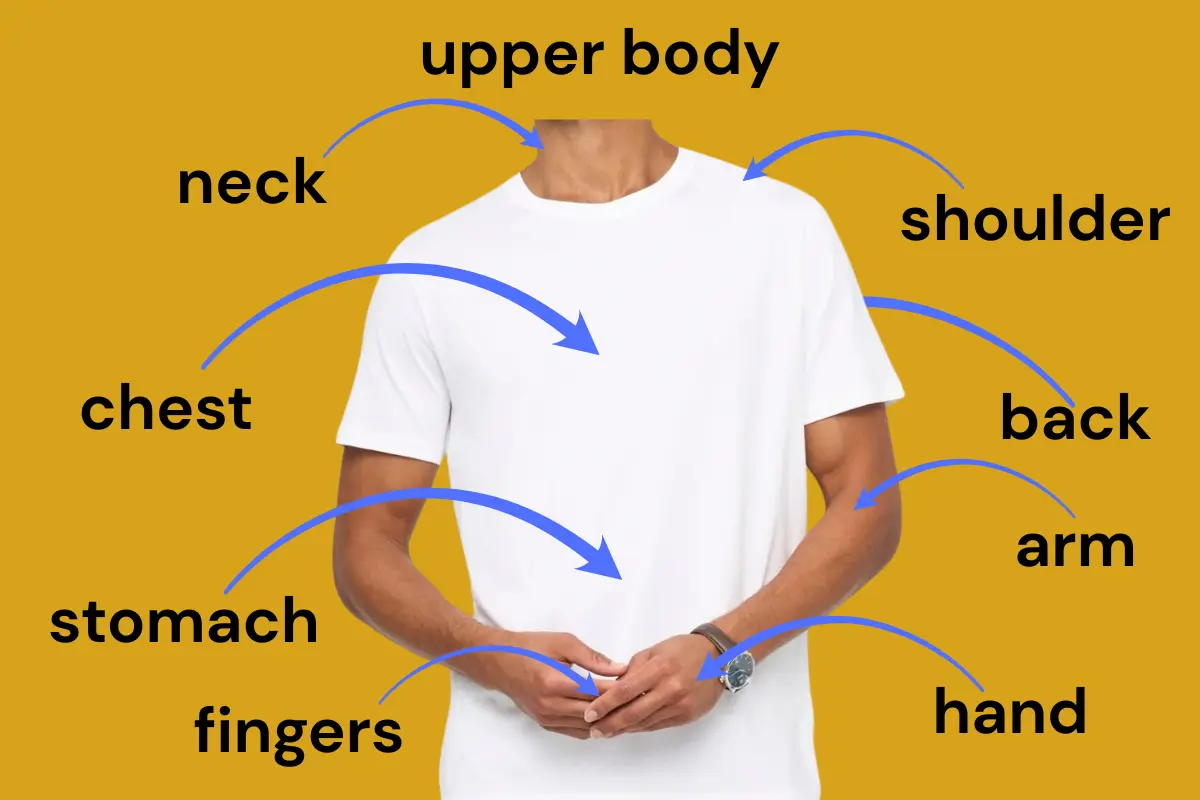
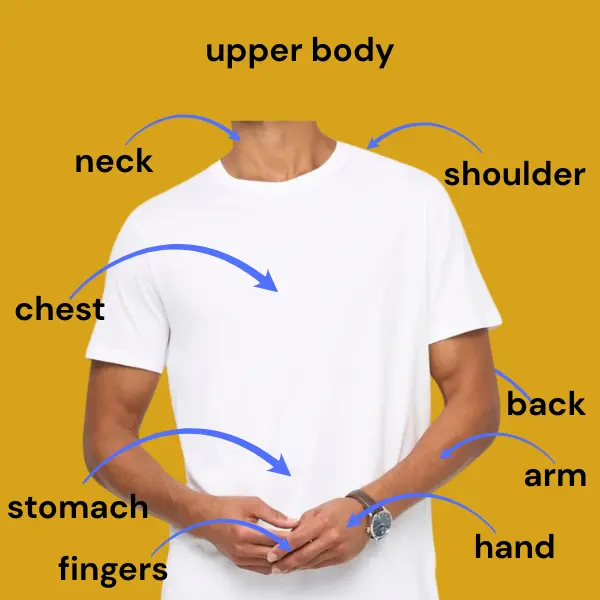
Neck
The part that connects your head to your body.
- My neck is stiff from sleeping badly.
- She wears a necklace around her neck.
- He has a long neck.
Shoulders
The parts where your arms connect to your body. ('shoulder' singular, 'shoulders' plural)
- Can you carry this bag on your shoulder?
- My shoulders are strong.
- He has broad shoulders.
Arms
The long parts from your shoulders to your hands. ('arm' singular, 'arms' plural)
- Raise your arms above your head.
- My arms are tired.
- She has strong arms.
Hands
The parts at the end of your arms with fingers. ('hand' singular, 'hands' plural)
- Please wash your hands before eating.
- My hands are cold.
- He has big hands.
Fingers
The five parts at the end of each hand. ('finger' singular, 'fingers' plural)
- I hurt my finger when I closed the door.
- She wears a ring on her finger.
- Count on your fingers.
Chest
The front part of your body between your neck and stomach.
- The doctor listened to my chest.
- My chest hurts when I breathe.
- He has a broad chest.
Back
The rear part of your body from shoulders to bottom.
- My back hurts after carrying heavy bags.
- Lie on your back.
- She has back pain.
Stomach
The front part of your body below your chest.
- My stomach hurts. I ate too much.
- He has a big stomach.
- Lie on your stomach.
Ready to test your Main Body Parts knowledge?
Challenge yourself with fill-in-the-blank exercises
[Ad: after-upper-body-section]
Lower Body
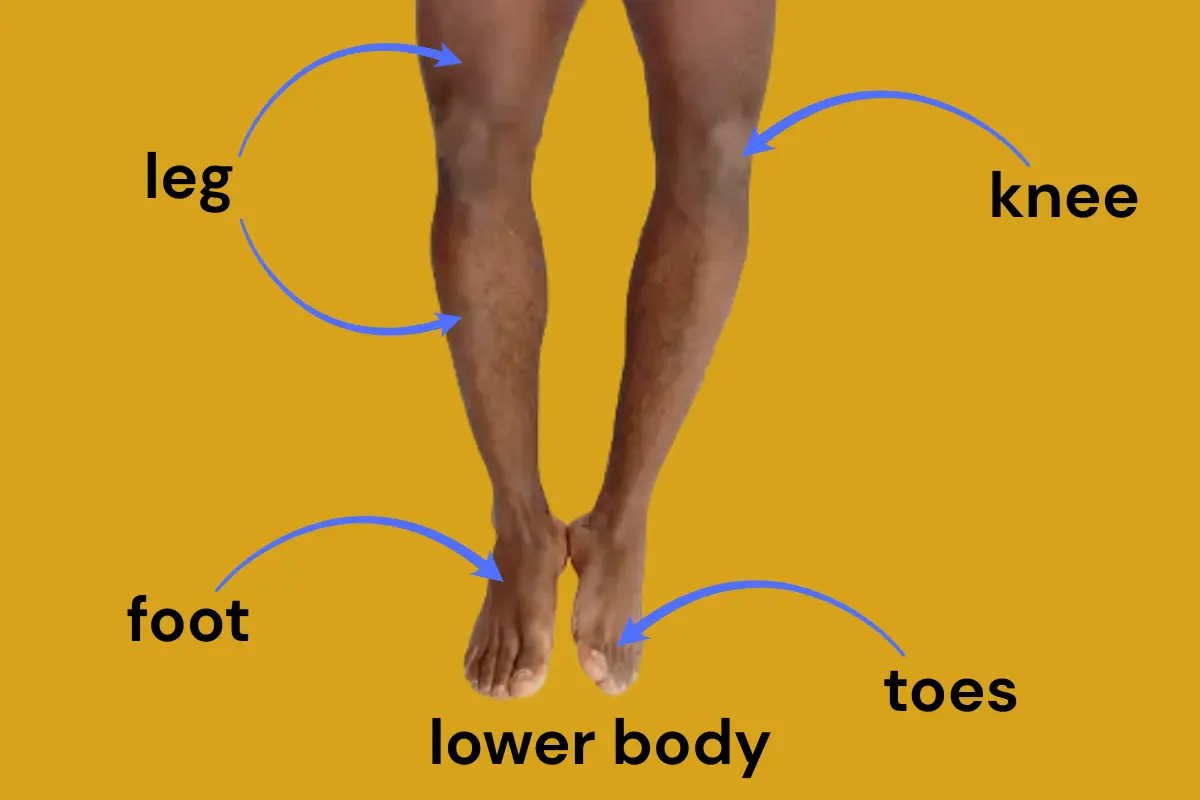
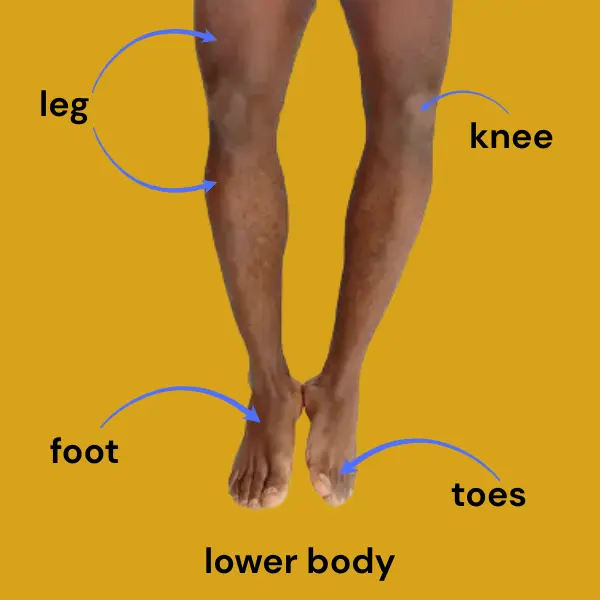
Legs
The long parts you walk with. ('leg' singular, 'legs' plural)
- My legs are tired from running.
- She has long legs.
- Stand on your legs.
Knees
The joints in the middle of your legs.
- I fell and hurt my knee.
- Bend your knees.
- My knees are weak.
Foot / Feet
The parts at the end of your legs (foot = singular, feet = plural).
- My feet are cold. I need socks.
- I hurt my foot.
- She has small feet.
Toes
The five parts at the end of each foot ('toe' singular, 'toes' plural).
- I hit my toe on the table leg.
- My toes are cold.
- She has small feet.
Master Main Body Parts sentence building!
Drag and drop words to form correct sentences
[Ad: after-lower-body-section]
Useful Phrases with Body Parts
Talking About Health
- My head hurts.
- I hurt my arm.
- My stomach hurts.
- My feet are cold.
Following Instructions
- Raise your hand.
- Open your mouth.
- Close your eyes.
- Wash your hands.
Asking for Help
- Can you give me a hand? (Can you help me?)
- I need help with my back.
- My leg hurts. Can you help?
[Ad: before-common-mistakes]
Common Mistakes to Avoid
❌ Wrong: I have two foot.
✓ Correct: I have two feet. (special plural)
❌ Wrong: My eye hurt.
✓ Correct: My eyes hurt. (we have two eyes, use plural)
❌ Wrong: I have pain in my stomachs.
✓ Correct: I have pain in my stomach. (only one stomach)
❌ Wrong: My hand are cold.
✓ Correct: My hands are cold. (hands = plural, use "are")
[Ad: before-learning-tips]
Learning Tips
[Ad: before-speaking-practice]
Speaking Practice
To practice your pronunciation, listen to the audio first. Then 'Record' yourself repeating what you heard, and use the 'Playback' button to compare your pronunciation with the audio. If you want to record yourself again, simply click 'Delete'!
✓ I have two eyes, two ears, one nose, and one mouth on my face.
✓ I have a sore head. My stomach hurts. My legs are tired.
✓ Touch your nose. Raise your hand. Stand on one foot.
✓ I have two hands, with four fingers and one thumb on each hand.
✓ I walk on my feet and I write with my right hand.
✓ I see with my eyes; I hear with my ears, and I smell with my nose.
Word search
Find all 12 words from this lesson. They can read forwards, backwards, up, down or diagonally.
Your exercises are loading!
Your exercises are loading!
Your exercises are loading!
Continue Your Learning Journey
Keep building your English skills with these carefully selected next steps
Help Other People Just Like You Improve Their English!
Share Free Daily English With Them Today!